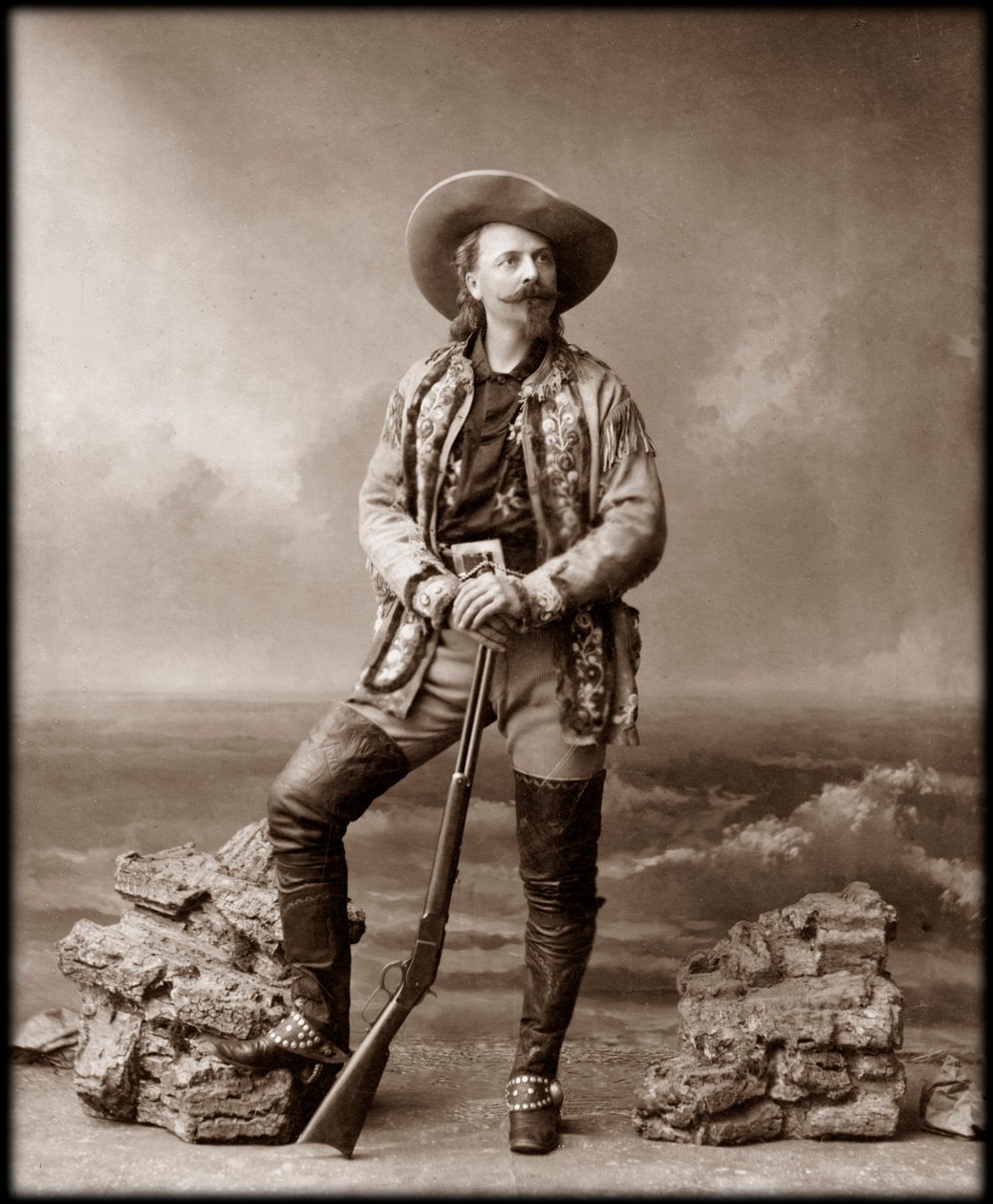
 William Frederick “Buffalo Bill” Cody (February 26, 1846 – January 10, 1917) was one of the most iconic figures of the American Old West, known for his roles as a scout,
buffalo hunter, and, most famously, a worldwide showman.
William Frederick “Buffalo Bill” Cody (February 26, 1846 – January 10, 1917) was one of the most iconic figures of the American Old West, known for his roles as a scout,
buffalo hunter, and, most famously, a worldwide showman.Queer Places:
Pahaska Tepee Resort, 183 N Fork Hwy, Cody, WY 82414, United States
Buffalo Bill Memorial Museum, Lookout Mountain Road, Golden, Colorado 80401 United States
William Frederick “Buffalo Bill” Cody (February 26, 1846 – January 10, 1917) was one of the most iconic figures of the American Old West, known for his roles as a scout,
buffalo hunter, and, most famously, a worldwide showman.
Born in LeClaire, Iowa, Cody grew up in the Kansas Territory during the volatile “Bleeding Kansas” era. His father, an ardent abolitionist, was killed due to political tensions when Cody was only eleven, forcing him to begin working at a young age to support his family.
He worked as a wagon train driver, gold prospector, and fur trapper. He claimed to have ridden for the Pony Express (though historians have debated the extent of this) and served as a scout for the U.S. Army during the Indian Wars, receiving the Congressional Medal of Honor for his service.
He earned his famous nickname, Buffalo Bill, while hunting buffalo to feed railroad construction crews. He later transitioned into show business, starring in plays before founding Buffalo Bill's Wild West in 1883.
His traveling exhibition became a global phenomenon, featuring sharpshooters like Annie Oakley and prominent Native American figures like Sitting Bull. The show helped cement the romanticized, mythic image of the American West in the public imagination.
Despite his fame, Cody faced significant financial trouble later in life due to poor investments. He passed away in 1917 in Denver and was buried on Lookout Mountain in Colorado.
There is no historical evidence to suggest that Buffalo Bill himself identified as LGBTQ. However, his life is often examined in queer studies for his associations and his notably progressive attitudes toward gender and non-traditional lifestyles.
Scholarship, such as that by Gregory Hinton, has explored Cody’s "cordial acquaintanceships" with figures who defied the gender norms of the 19th century, such as the flamboyant Irish poet and playwright Oscar Wilde and the acclaimed French painter Rosa Bonheur.
Cody was a vocal proponent of women’s suffrage and equal pay. He famously insisted that if a woman performed the same work as a man, she should receive equal compensation. He credited his time working with strong, independent women like Annie Oakley and Calamity Jane for shaping these views.
Historians have noted that Cody was generally open-minded and inclusive in his employment practices, hiring a diverse array of performers regardless of their background or gender, which was quite distinct from the prevailing social attitudes of the era.
The artist and socialite Abraham Archibald Anderson is credited with designing Pahaska Tepee, the hunting lodge Buffalo Bill Cody built near the east entrance to Yellowstone National Park.
Cody chose the location for the lodge in 1901, and Anderson—who was a friend of Cody and a prominent figure in the region’s development—designed the structure around 1902 or 1903. The lodge, constructed of lodgepole pine logs, officially opened to guests in 1905.
In addition to his work as an artist and architect, Anderson was a significant conservationist who served as the first Special Superintendent of the Yellowstone Forest Reserve. His connection to this project is frequently highlighted in biographical accounts of his life and in the history of the Wyoming region.
References:
 Dictionnaire historique des homosexuel.le.s célèbres Paperback – October 19, 2017 by Michel Larivière |
Other references:
Support this project
This website is a passion project researched, developed, and funded entirely by me. If you find the content valuable and would like to help support the ongoing research and hosting costs, any contribution is deeply appreciated.
Thank you for keeping this independent resource alive!
My books on Amazon: Elisa Rolle's books